Tax Resolution Services

Wage Garnishment Release

If you have tax debt, your wages, commissions, and even your Social Security income can be seized through a wage levy, but Direct Tax Relief can work with the IRS to release it.

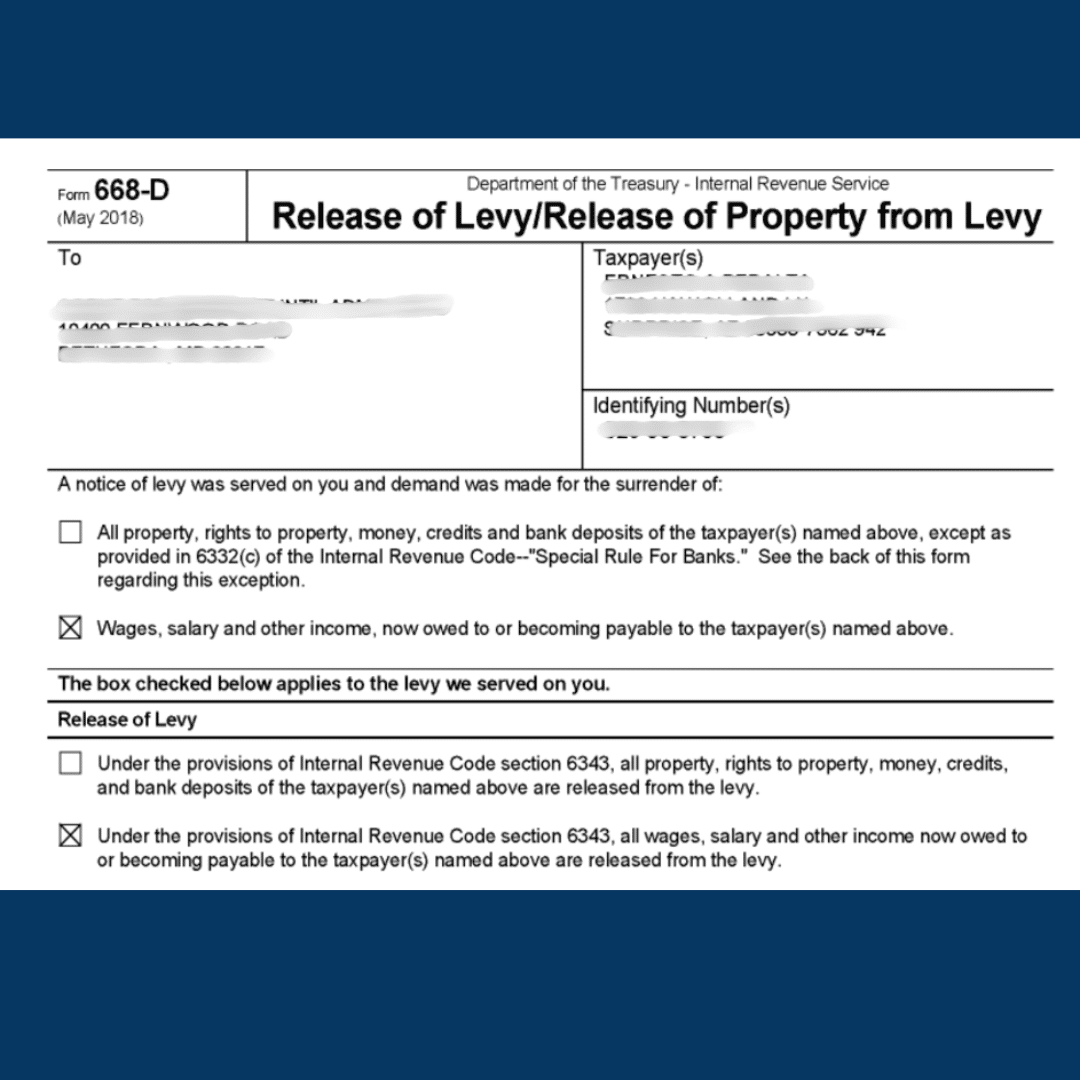
IRS Form 668-D, Release of Levy, showing wages released.
Wage Garnishment Release Exmaple

Issued by the Internal Revenue Service and State tax agencies, a wage garnishment (or wage levy) is a way to pay tax debt through the seizure of your income from paychecks, commissions, and other sources, including social security. Many taxpayers are unaware that vendors they work with will be contacted by the IRS – and a garnishment on your 1099 income will be applied. The tax professionals at Direct Tax Relief will negotiate with the IRS and/or State to have your wage garnishment released or modified to find a permanent resolution to your tax debt.

A man pointing to a chart within a document on a table.

With DTR’s Help

You can have your wage, Social Security and other garnishments released.

Checkmark

Release wage garnishment

Checkmark

Prevent future garnishments

Checkmark

Creates peace of mind

Checkmark

Prevents employer being notified about your tax debt

Get Help With Wage Garnishment Release

Our Other Tax Resolution Services

Handshake Icon

Offer in Compromise

If you owe tax debt, an Offer In Compromise can help you settle it for less. DTR has the expert negotiation skills needed to get your tax debt reduced as much as legally allowed.

Suitcase Icon

Payroll Tax Resolution

If you’re a business owner who fails to file or pay payroll taxes, Direct Tax Relief will negotiate with the IRS to reach a resolution and protect your business from shutting down.

Wheel and Shock Icon

Penalty Abatement

Direct Tax Relief negotiates with the IRS to have these difficult penalties removed from your account, getting you out of debt and back to freedom, based on reasonable cause.

Checklist Icon

Preparation of Unfiled Tax Returns

Working with you from the first step of tax debt resolution, Direct Tax Relief has tax accountants to prepare your unfiled tax returns, whether it's an individual return or complex corporation returns.

Document and Pen Icon

Installment Agreement

At Direct Tax Relief, we'll negotiate with the IRS to create an easy, affordable payment plan that gets you in compliance, and works with what you can afford, preventing future IRS wage and bank garnishments.

Headset Icon

Audit Representation

If your individual or business tax returns are being audited, Direct Tax Relief’s tax experts can take over your audit proceedings to ensure you get the resolution you deserve.

Bank Icon

Bank Levy Release

When your taxes remain unpaid and a bank levy is issued, Direct Tax Relief can help you find a resolution so you can avoid frozen bank accounts and money seizure and, in some cases, have current bank levies released.

Dispensed Dollar Icon

Wage Garnishment Release

When your wages, commissions, and Social Security income are being garnished because of unpaid taxes, DTR will negotiate with the IRS to put a stop to it.

Stroefront Icon

State Tax Problems

If you’re a retail store, contractor, or provide in-home services, you could face state tax issues. But the experts at Direct Tax Relief have expert guidance and solutions to get you on the road to tax debt freedom. We can also help with state income, payroll and sales tax issues.

Slashed home icon

Tax Lien Release

In certain situations, Direct Tax Relief may be able to have your federal tax lien released, once we complete resolution of your case.

Marriage Rings Icon

Innocent Spouse Relief

For married couples, filing your taxes jointly can provide many benefits–but it can create problems. If you have tax liabilities, interest, and penalties as a result of filing jointly, DTR professionals can get you on the road to being tax debt free.

Home in Hand Icon

Lien Subordination

If you are looking to refinance your house but have a federal tax lien, the tax professionals at Direct Tax Relief will pursue all avenues to find a solution through a lien subordination.

Frequently Asked Questions

An IRS wage garnishment happens when the IRS requires your employer to send a portion of your paycheck directly to the government to pay unpaid tax debt. This action is typically taken after multiple collection notices have gone unresolved. The IRS issues a levy to the employer, who must then withhold part of your wages. The garnishment continues until the tax debt is resolved or the levy is released.

The IRS can take a significant portion of your wages through a levy. Unlike many other creditors, the IRS does not need a court order to garnish wages. Only a small exempt amount based on your filing status and dependents is protected. The remaining income may be applied toward your tax debt.

Yes, a wage garnishment can often be stopped by resolving the underlying tax issue. This may involve setting up a payment plan, requesting temporary collection relief, or qualifying for another tax resolution option. Once an acceptable resolution is in place, the IRS may release the wage levy. Acting quickly can help limit how much income is taken.

An IRS wage garnishment typically continues until the tax debt is fully paid or the levy is released. Unlike a bank levy, which affects a specific account balance, wage levies can continue with each paycheck. This means a portion of your income may be withheld indefinitely if the issue is not addressed. Resolving the tax debt is the only way to stop the garnishment.

The IRS generally sends several notices before issuing a wage levy. These notices inform taxpayers about the outstanding balance and warn of possible collection actions. If the issue remains unresolved, the IRS may issue a Final Notice of Intent to Levy before garnishment begins. Responding to these notices early can help prevent wage garnishment.

If your wages are being garnished, it is important to act quickly. Addressing the underlying tax debt can help stop the levy and prevent further collection actions. Possible solutions may include negotiating a payment arrangement or requesting temporary relief. Taking action early can reduce the long-term financial impact.

Yes, the IRS may garnish wages from more than one employer if a taxpayer has multiple jobs. Each employer who receives a levy notice is required to comply with it. This means multiple paychecks could be affected at the same time. Resolving the tax issue promptly can help prevent additional levies.

Employers are required by law to comply with an IRS wage levy once they receive it. They must calculate the exempt amount and send the remaining portion of wages to the IRS. While the garnishment does not make the employer responsible for the tax debt, it does require them to process the levy. This can sometimes create awkward or stressful workplace situations.

Yes, losing a large portion of your paycheck can create significant financial strain. In some cases, taxpayers may qualify for relief if the garnishment prevents them from meeting basic living expenses. Demonstrating financial hardship may help support a request for a levy release. Each case must be reviewed to determine available options.

A wage garnishment can be released when the IRS approves a qualifying resolution for the tax debt. This may include entering a payment plan, resolving the balance through another tax relief option, or demonstrating financial hardship. Once the IRS agrees to release the levy, the employer will stop withholding wages. Acting quickly improves the chances of stopping the garnishment sooner.